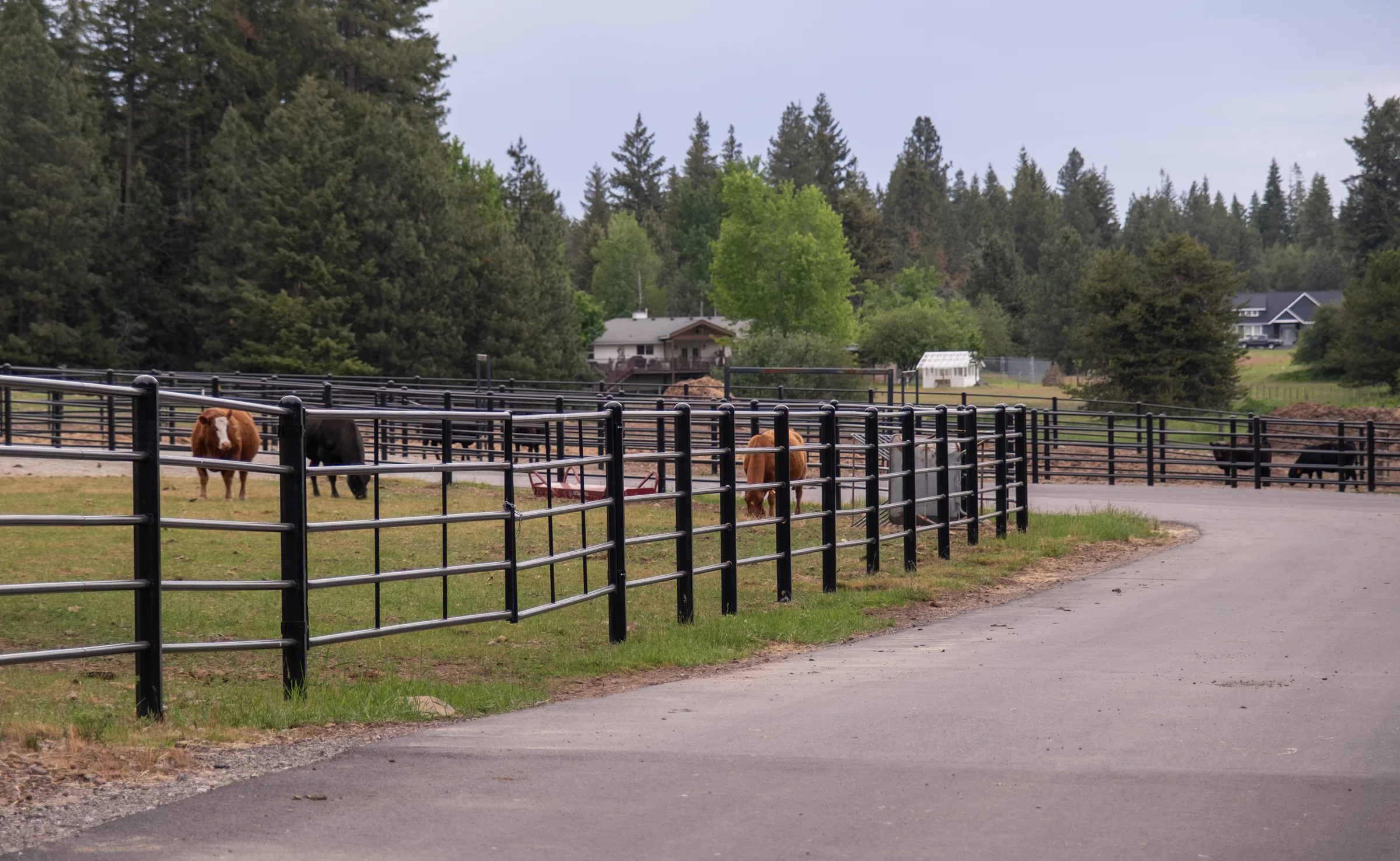

Have you ever driven past a fence and felt like something looked off, even if you could not immediately tell what was wrong? Many times, the issue is the top line of the fence.
A smooth top line flow means the fence follows the natural topography of the ground while still maintaining a clean, uniform, and professional appearance.
Why a Smooth Top Line Flow Matters
Functional Integrity of the Fence
A ranch fence protects livestock, defines property lines, marks boundaries, and helps deter unwanted access. During installation, the fence must maintain a smooth top line while also staying within the proper height range for the animals and fence system being used.
Aesthetic Appeal
A ranch is not only a working property. For many owners, it is a home, a long-term investment, and a lifestyle. A smooth fence line creates a polished first impression and gives the whole property a more finished look.
Increased Property Value
Buyers notice a well-built fence, but they notice a poorly installed one even faster. A crooked or uneven fence can raise concerns about future repairs, livestock safety, and overall property maintenance.
Investing in proper fence installation is not just a purchase. It is a long-term strategy for protecting livestock and increasing property value.
How to Install a Fence with a Smooth Top Line Flow
Preventing Frost Heave
In colder climates, water in the soil freezes and thaws, gradually forcing fence posts upward. This can create a crooked top line and weaken the support of the fence.
Common post depths to avoid frost heave can range from 24 inches to 48 inches, and some locations may require even deeper posts depending on the frost line, soil, fence type, and installation area.
Proper Post Support
Once the proper post depth is determined, the next step is making sure the post does not sink over time. Soil conditions like loam, clay, or silt can all affect how much a post settles.
The bottom of each post hole should be cleaned out or compacted to create a firm base. Simply adding more concrete will not always prevent settling if the post is resting on loose material.
Experienced Installation Technique
Maintaining a smooth top line requires more than a string line or laser level. Most ranch ground is uneven, so proper installation takes experience, leveling tools, and careful eye work to account for slope, soil, tree roots, post depth, and changing terrain.
The fence also needs to stay within the correct height range. For example, Buckley Steel Board often requires a post height range of 50 inches to 62 inches, with a median target of 57 inches. If the ground does not allow for a smooth line within that range, dirt work may be needed before drilling holes.
Do It Once. Do It Right.
In ranch development, it can be easy to overlook the small details of fence installation. However, a properly designed and installed fence improves functionality, appearance, animal safety, and long-term property value.
A smooth top fence line is one of the clearest signs that the job was done correctly.
Click here to request a free estimate and let’s build your ranch fence the right way.