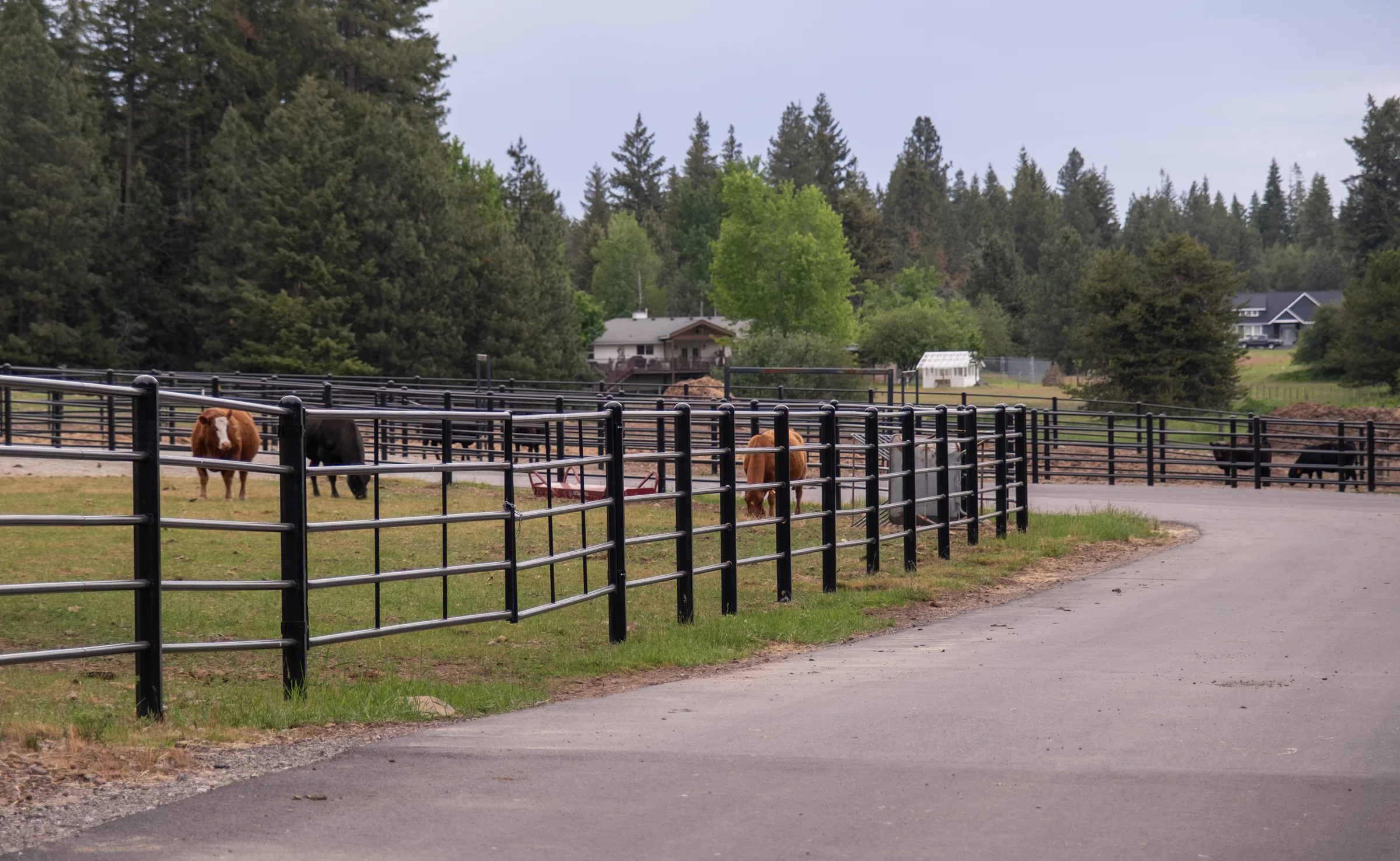

Split rail fencing is a timeless, rustic option that property owners love for its natural beauty and simplicity. Whether you're fencing a ranch, lining a driveway, or creating a perimeter around your yard, split rail fencing offers that classic “old-west” aesthetic that blends seamlessly into many landscapes.
But when you need more functionality—especially if you have dogs, goats, sheep, or other small animals— adding wire mesh to your split rail fence can be an excellent solution.
In this guide, we’ll cover what a split rail fence is, why wire mesh is often added, the most common wire mesh options, height considerations, material choices, and modern alternatives.
What Exactly Is a Split Rail Fence?
A traditional split rail fence is made from wooden posts and rails that are split, not sawn. This gives them the rugged, uneven, handcrafted look associated with old-style ranch fencing.
While cedar is likely the most common material, split rail fences can also be made from pine, black locust, or other types of wood. There are also modern rail fence systems made from steel boards, pipe, round wood, aluminum, HDPE, or concrete.
Some people refer to all rail-style systems as “split rail,” even though technically they are not.
Why Add Wire Mesh to a Split Rail Fence?
Using split rail fence wire mesh transforms a decorative rail fence into a functional containment fence. Traditional split rail fencing has large openings between rails, which allow smaller animals to pass through.
If you’re trying to contain animals like these, wire mesh is often essential:
- Dogs
- Goats
- Chickens
- Sheep
- Other small animals
Wire mesh can also help keep unwanted wildlife out—such as coyotes or wild hogs—provided you choose a strong enough mesh type.
Types of Wire Mesh for Split Rail Fencing
There are several types of wire you can add to a rail fence. Each comes with strengths and limitations. Here’s a breakdown to help you choose the best option for your property.
1. Welded Wire
Welded wire is typically the lowest-cost option. The wires are welded at each joint to form a grid.
Pros
- Budget friendly
- Easy to install
- Works well for gentle animals or gardens
Cons
- Not very durable
- Weld points can snap under pressure
- Not suitable for active dogs, goats, or livestock
If your animals are hard on fencing, welded wire often breaks apart long before you want it to.
2. No-Climb Horse Fence
No-climb horse fence is widely considered a premium option for split rail fence wire mesh.
No-climb fencing comes in multiple grades:
- Low-tensile strength
- High-tensile strength
- Black-coated high-tensile for a premium appearance
Unlike welded wire, no-climb fencing uses knotted intersections instead of welded joints, allowing it to flex and absorb pressure. It’s one of the more durable wire options you can add to a split rail fence and can be a strong choice for containing dogs, horses, goats, sheep, and other animals when the mesh, height, installation, and application are appropriate.
If your budget allows it, no-climb horse fence is often worth considering when durability and smaller openings are priorities.
3. Sheep & Goat Fence
Sheep and goat wire is similar to no-climb fencing but commonly uses larger openings, such as 4-inch by 4-inch squares instead of smaller horse-fence openings.
Pros
- Very strong
- Great for goats and sheep
- Often more affordable than no-climb horse fence
Cons
- Larger openings may be easier to climb
- Large openings may be less appropriate where horse hoof entrapment is a concern
For many ranch properties, sheep and goat fencing can be a solid middle-ground option when it matches the animals and application.
Wire Mesh Height Options
The height of the wire mesh you choose for your split rail fence depends on what you’re trying to contain or keep out. Common options include:
- Bottom 2 feet for very small animals
- Bottom 3 feet
- Standard 4 feet
- Extra-tall 5 feet
- Extra-tall 6 feet
If you're containing small dogs and want to maintain a clean aesthetic, 2-foot or 3-foot mesh may be sufficient. Many 3-rail or 4-rail fences are roughly 4 feet tall, so a full-height mesh can be a practical all-around choice for many farm and acreage applications.
Taller containment may be appropriate for goats, deer pressure, or other applications, but the required height depends on the animal, terrain, local conditions, and fence design. Once the containment requirement becomes significantly taller than the rail fence itself, another fence system may be more practical.
Split Rail Fencing Material Considerations
Cedar and black locust are naturally more rot-resistant than some wood species, so they’re often left untreated. If you choose treated pine, ask the supplier or installer what preservative treatment is used and whether it is appropriate for your application.
Cedar will weather to a gray tone over time. If you want to maintain more of its fresh, warm color, ask about a compatible exterior sealer and maintenance schedule.
Modern Split Rail Fence Alternatives
While traditional split rail fencing has been around for generations, several modern rail-style fences offer a ranch-rail look with different maintenance, durability, and appearance characteristics.
These include:
- Steel
- High-density polyethylene, also known as HDPE
- Concrete
Depending on the system, these materials may offer longer service life, lower maintenance, or improved resistance to moisture and weather compared with traditional wood.
A few examples of modern split rail fence alternatives include:
Ponderosa Rail Fencing and High Plains Ranch Rail use combinations of wood and metal, so their maintenance profile differs from all-steel, HDPE, or concrete systems. They can still be worth considering depending on the look, budget, and function you want.
Many rail systems can also be paired with wire mesh when the manufacturer, installation method, and application allow it.
Explore Further
If you’d like to see more photos, style options, and examples of modern or traditional rail fencing, browse our cedar split rail fence page or explore the fence catalog. When you find a fence you like, reach out and our team can help you compare price options and fit.
Request a free estimate and let’s start planning the right fence for your property.